
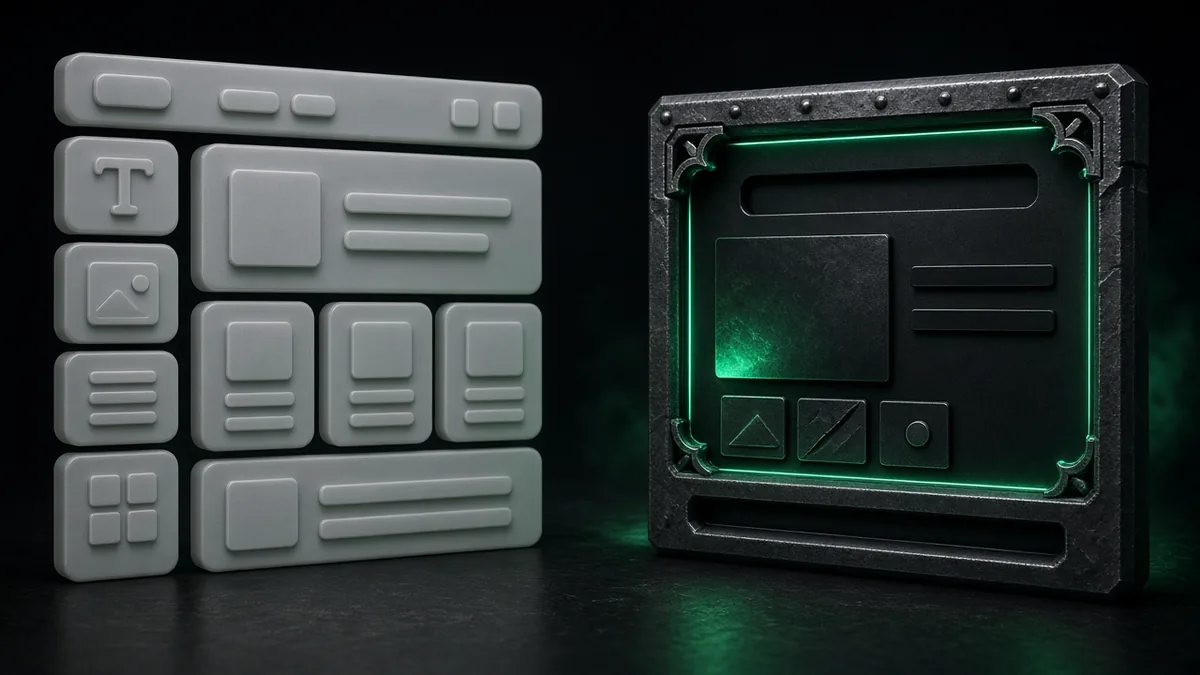
If you run a small business, you have probably stared at the same fork in the road: drag-and-drop a site together on a builder, or invest in a custom WordPress website. Both paths can put you online. They are not equal when it comes to ownership, search visibility, speed, and long-term cost.
This guide is written for owners who need a clear decision—not a developer manifesto. We will compare website builders and custom WordPress on the factors that actually affect your leads and budget.
What “website builder” usually means
Website builders (think template-first platforms with drag-and-drop editors) promise a finished site in an afternoon. You pick a theme, drop in photos and copy, connect a form, and publish. For a one-page brochure or a short-lived campaign, that speed is real.
The tradeoff is structure. Most builders lock design, plugins, and hosting into one vendor. Moving away later can mean rebuilding from scratch. You also inherit their SEO limitations, form tools, and performance quirks.
What custom WordPress actually is
WordPress powers a large share of the web because it separates content, design, and hosting. You own the files and the database. You choose the theme, the plugins, and where the site lives. Official documentation from WordPress.org covers the core features that make that flexibility possible.
“Custom” does not mean starting from a blank IDE every time. At Ironcraft Studio, custom WordPress means a site designed around your services, offers, and local audience—built on WordPress so you can edit pages, publish blog posts, and grow without starting over.
Ownership and portability
- Builders: your site often lives inside the platform. Export options vary; redesigns can force a full rebuild.
- Custom WordPress: you own the code and content. You can change hosts, themes, or developers without losing years of pages.
SEO and content control
Google’s own SEO starter guide emphasizes clear structure, helpful content, and pages that work well on mobile. Custom WordPress makes it straightforward to shape titles, headings, schema, and internal links the way your business needs.
Builders can rank. Many do. The friction shows up when you need industry landing pages, local service pages for Sebastian or Vero Beach, or a blog that supports your sales process. Custom setups give you that room without fighting the template.
Design that matches how you sell
Service businesses sell trust. Your homepage should lead with outcomes, proof, and a clear next step—not a generic “Welcome to our website” hero. Custom layouts let you put pricing context, service areas, and calls to action where visitors actually look.
Examples of purpose-built WordPress sites from our studio work include logistics and transport niches such as logitransports.com and boattransportnearme.com—sites shaped around specific search intent rather than one-size templates.
Cost: sticker price vs total cost of ownership
Builders look cheaper on day one. Monthly plans feel small compared with a custom build quote. Add the years of platform fees, limited integrations, and the day you outgrow the template, and the math often flips.
Custom WordPress costs more upfront because someone is designing information architecture, performance, and conversion paths for your business. Ongoing costs are hosting, selective plugins, and maintenance—not a tax every time you need a new section.
Ironcraft’s positioning is intentional: we use AI assistance to streamline research, drafts, and production so premium custom WordPress stays within reach for small businesses—not only enterprise budgets. Savings go into better structure and support, not fluff features.
When a builder is enough
- You need a temporary landing page for an event or short campaign.
- Your offer is simple, and you do not expect many service pages or a content program.
- You are testing an idea before committing to a long-term brand site.
If that is you, a builder can be a smart first step. Just plan the exit: keep copy and images organized so migrating to WordPress later is less painful.
When custom WordPress is the better bet
- You sell services locally or nationally and need SEO landing pages that can grow.
- You want to own your site, change hosts, and keep full control of forms, CRM, and analytics.
- Page speed, Core Web Vitals, and brand design matter to how you win work.
- You expect to add booking, quoting, or lead tools without rebuilding the whole site.
Google also rewards helpful, people-first content. A custom WordPress blog and service structure makes that content program sustainable.
A practical decision checklist
Ask yourself:
- Will I still need this site in three years?
- Do I need unique pages for services or cities?
- Do I care who owns the files if the platform raises prices?
- Is lead quality more important than launching this weekend?
If you answered yes to most of those, custom WordPress is usually the calmer long-term path.
How Ironcraft approaches the build
We start with your offers, audience, and search goals—then build a WordPress site you can edit. Hosting and SEO can ride along so you are not juggling three vendors. Learn more about our process on the about page, or browse how we think about related topics like AI-assisted design and cost and managed WordPress hosting.
Ready to choose with clarity?
Whether you are replacing a dated builder site or launching your first professional presence, the right stack should support sales—not fight them. Ironcraft Studio in Sebastian, FL builds custom WordPress sites for small businesses on the Treasure Coast and nationwide.
Contact us to talk through builders vs custom WordPress for your situation—or call 772-588-4413 / email projects@ironcraftstudio.com.